
📊 57% of Google searches now end without a single click. The answer appears at the top — and the searcher moves on without ever visiting a website.
That’s not a glitch. It’s the new normal. And it’s only going to get more pronounced as AI becomes the default interface for finding information online.
If you’re still thinking about search exclusively in terms of Google rankings and keyword density, you’re optimizing for a channel that’s changing under your feet. That’s where GEO — Generative Engine Optimization — comes in.
What GEO Actually Is
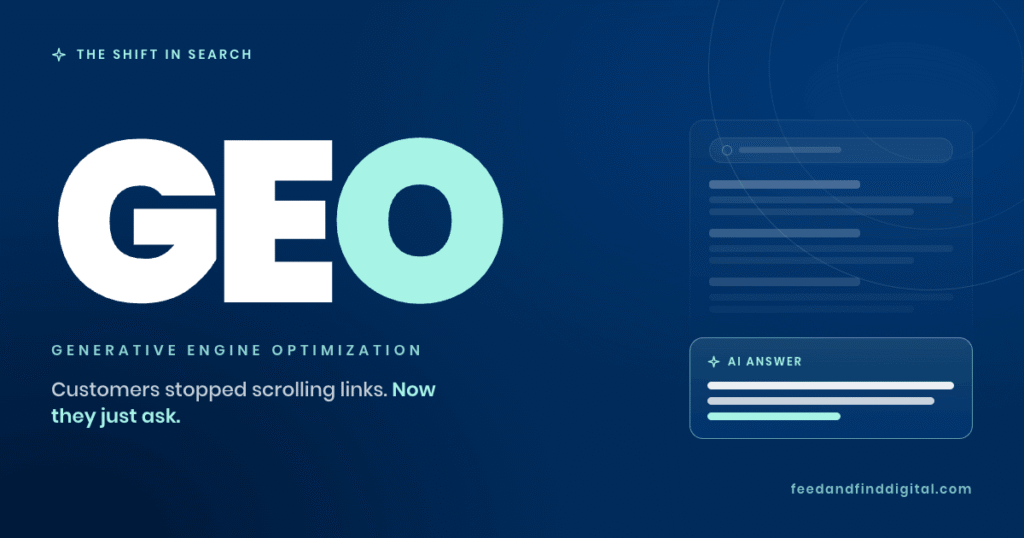
Generative Engine Optimization is the practice of making your brand visible inside AI-generated answers — the kind that show up in ChatGPT, Perplexity, Google’s AI Overviews, and whatever comes next.
When someone types “best natural skincare brand for sensitive skin” into Perplexity, it doesn’t return a list of links. It reads sources, synthesizes an answer, and names specific brands. When someone asks ChatGPT to recommend a music licensing agency in Nashville, it either knows your name or it doesn’t.
Generative Engine Optimization is about making sure it knows your name — and that it trusts you enough to say it.
This is different from traditional SEO in one important way. SEO was about earning clicks. GEO is about earning mentions inside answers that don’t require a click at all. The goal shifts from “rank on page one” to “get cited as the authority.”
According to Search Engine Journal, AI-generated search results are already reshaping which brands get discovered — and the brands winning early are those building for this shift now, not later.
How AI Decides Who to Cite
AI models don’t pull from thin air. They’re trained on massive amounts of text from across the internet, and they also pull from real-time sources when generating answers. The signals they use to decide who’s credible look different from what Google’s algorithm has traditionally cared about.
A few things that matter in a GEO context:
- Structured, clear content. AI loves content that answers a specific question well. If your website has a clear “who we serve,” “what we do,” and “why it works” — written in plain language, not SEO-stuffed sentences — AI can pull from it cleanly.
- Third-party mentions and citations. If your brand is mentioned in articles, press features, podcast descriptions, or other credible content online, AI is more likely to include you. It’s looking for consensus — multiple sources saying the same thing about you.
- Authority in a specific niche. Broad positioning is the enemy of Generative Engine Optimization. A brand that clearly owns a specific category (“sustainable activewear for postpartum women” or “vinyl record pressing for independent artists”) is far more citable than one that’s vague about what it does.
SparkToro’s research on AI citations shows that brands with clear, consistent positioning across multiple web sources are cited at significantly higher rates than brands with scattered or vague online presence.
Why 2026 Is the Year to Pay Attention
The AI search adoption curve moved faster than most people expected.
- ChatGPT reached 100 million users faster than any consumer product in history
- Perplexity now handles hundreds of millions of queries per month
- Google’s AI Overviews appear at the top of results for an enormous percentage of commercial searches
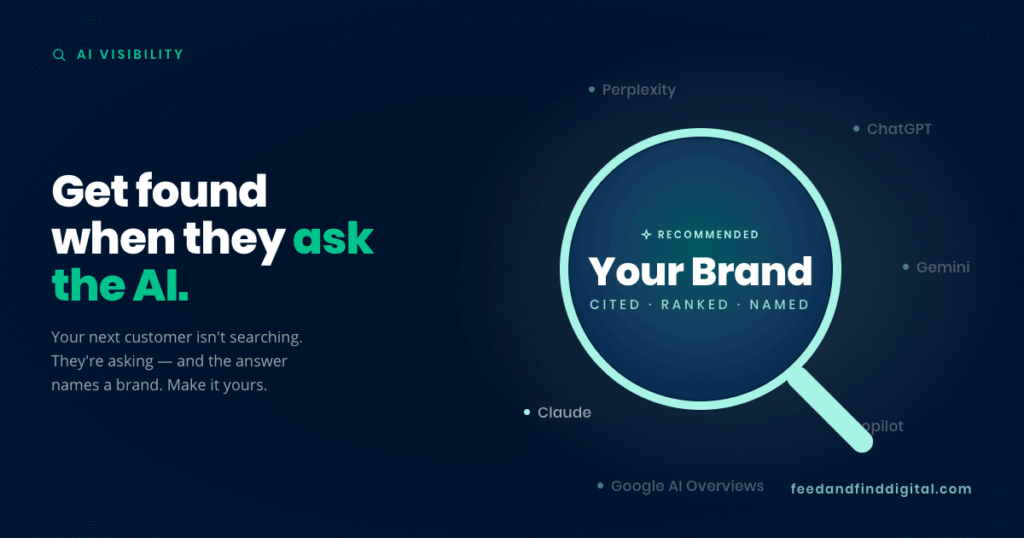
What this means practically: a meaningful portion of your potential customers are already using these tools to discover brands like yours. They’re asking questions, getting curated answers, and making decisions — all without ever scrolling through a results page.
If your brand isn’t in those answers right now, you’re not losing a few clicks. You’re invisible to an entire discovery channel.
The brands that are paying attention to this now — building their content, their authority, and their structured presence — are going to have a significant head start. By the time GEO feels obvious, the competitive window will have closed.
This is exactly the kind of shift we help founders navigate at Feed and Find Digital. Paired with TikTok Ads, GEO creates a two-channel discovery engine that works whether someone finds you through social or through search.
What Happens to Brands That Ignore It
This isn’t about scare tactics. It’s about trajectory. Here’s what’s already happening to brands that are only optimizing for traditional search:
- Their organic traffic is eroding because AI Overviews absorb zero-click searches that used to drive visits
- They’re spending more on paid ads to compensate for declining organic reach
- They’re watching newer competitors get named in AI answers because those brands built credibility signals AI can actually use
According to the Semrush blog, AI Overviews are showing up for over 13% of queries — and that number is climbing steadily.
The brands that show up consistently in AI answers aren’t always the biggest ones. They’re often the most specific, the most clearly positioned, and the most intentional about the content they put into the world. That’s good news for founder-led creative brands — you can compete with a company twenty times your size if you approach this the right way.
GEO rewards clarity and authority, not ad budgets. And right now, the field is still wide open.
Also worth reading: How to Know If Your Brand Is Showing Up in AI Search — the self-audit guide we put together so you can check your own GEO visibility in under ten minutes.
Key Takeaways
- Generative Engine Optimization (GEO) is the practice of getting your brand mentioned inside AI-generated answers, not just ranked in traditional search results
- AI tools like ChatGPT and Perplexity are already a primary discovery channel for a growing number of buyers
- Clear positioning, structured content, and third-party mentions are the core signals AI uses to decide who to cite
- The brands winning at GEO tend to be specific and niche — not necessarily the biggest or best-funded
- Starting now matters because the early movers will hold a durable advantage as AI search becomes the default
Frequently Asked Questions
Q: Is GEO replacing SEO, or do I need both? A: GEO doesn’t replace SEO — it extends it. Good SEO fundamentals (clear content, structured pages, credible backlinks) overlap significantly with what GEO requires. The key difference is intent: SEO targets click-through from a results page, while GEO targets a mention inside an AI-generated answer. Right now, the smartest brands are building for both simultaneously.
Q: How long does it take for GEO changes to show results? A: Faster than traditional SEO, in many cases. If your brand is already mentioned in credible external sources and you update your website copy to be more specific and structured, you can start appearing in AI answers within weeks. That said, building consistent authority takes time — it’s not a one-and-done fix.
Q: Do I need to be on every AI platform, or should I focus on one? A: Start by checking where your customers are actually searching. Perplexity skews toward research-oriented queries; ChatGPT is broad; Google AI Overviews reach anyone still using Google. The underlying content signals that help you show up in one place tend to help across all of them — so improving your GEO foundation lifts your visibility everywhere.
If you want to know whether your brand is showing up in AI search — and what it would take to change that — that’s exactly what we dig into on a free discovery call. No pitch. Just an honest look at where you stand.